
This topic (Kumamoto real estate investment) will migrate to Yaoki's forthcoming dedicated property advisory site yaoki-homes.jp. This page is kept as transitional reference and has been removed from this site's main listings. For real estate investment inquiries, please contact Yaoki directly.
- After TSMC subsidiary JASM landed in Kumamoto, Kikuyo commercial land posted +30.8% YoY in 2024 (2nd nationally), while Ozu's commercial and industrial land (3 sites combined) reached +33.2%, the highest in JapanSource: MLIT 2024 Published Land Prices; Kumanichi News 2024.03
- JASM Fab 1 began mass production in December 2024 (55,000 wafers/month); Fab 2 scheduled for end of 2027 — combined creating 3,400+ high-tech jobsSource: TSMC PR / JASM Wikipedia
- Three investment zones, three profiles: Kikuyo (high growth, short-to-mid term), Koshi (spillover, mid-to-long term), Kumamoto City Chuo Ward (traditional, stable)
- Investment window: 2025-2030 is the "golden entry phase"; from 2028 onward it shifts to a "selective holding phase"
- Key tax points: holding 1.4%, rental withholding 20.42%, disposal 39.63% or 20.315% depending on holding period
- Different investor types call for different allocation logic — at the end of this article we provide a 3 personas × 3 evaluation dimensions framework
- Why Kumamoto Real Estate Deserves Attention — Structural Inflection Analysis
- Kikuyo — Core of the Semiconductor Cluster, Steepest Growth Zone
- Koshi — Strong Spillover Effects, Mid-to-Long-Term Hold
- Kumamoto City Chuo Ward — Traditional Commercial Core, Stable Allocation
- Tax and Regulatory Essentials Before You Invest
- Allocation Logic Framework for Three Investor Types
- Conclusion: Golden Phase vs Selective Phase
- Sources
Why Kumamoto Real Estate Deserves Attention — Structural Inflection Analysis
Before TSMC announced in 2022 that it would establish its subsidiary JASM (Japan Advanced Semiconductor Manufacturing) in Kikuyo, Kumamoto Prefecture, Kumamoto was simply a regional prefecture in central Kyushu — land prices moved only marginally for years, and population continued to drift out.
But starting in 2022, that picture underwent a structural inflection — one that will last at least through 2030.
Three Structural Indicators
1. Reversal in Published Land Prices
According to MLIT's published land prices released in March 2024:
- Kikuyo commercial land (Kikuyo 5-1 site): +30.8% YoY (2nd nationally)
- Ozu commercial and industrial land (3 sites combined): +33.2% YoY (1st nationally)
- Kikuyo residential land: +23.5% YoY (among the top tier nationally)
- Koshi residential land: +15.8% YoY (clear spillover effect)
- Kumamoto City Chuo Ward commercial land: +5.2% YoY (steady growth)
Source: MLIT 2024 Published Land Prices; Kumanichi News 2024.03 (MLIT / Kumanichi)
These gains aren't merely "hot money speculation" — they correspond to real employment, real population inflow, and real supply chain landing. Both Kikuyo and Ozu sit within a 5 km radius of the JASM fab — and in 2024 both made it into Japan's top three for land price appreciation.
2. Net In-Migration Turned Positive (First Time in 33 Years)
In 2024, Kumamoto Prefecture recorded net in-migration of +3,840 people from other prefectures — the first positive print since 1991. Workers aged 25-39 (the core productive demographic) accounted for over 60% of the inflowSource: Kumamoto Prefecture Statistical Yearbook; MIC Resident Registry Migration Report.
Japan is one of the very few developed countries with net population decline, and most prefectures lose people every year. The fact that Kumamoto can reverse this trend signals that genuine demand has been activated — this is not a bubble.
3. 200+ Supply Chain Firms Established in Kikuyo
According to the Higo Bank Semiconductor Cluster Promotion Office, more than 200 suppliers have established a presence in and around Kikuyo (a significant increase from the 87 figure reported in H1 2024), including:
- Semiconductor equipment (Tokyo Electron, Applied Materials, Lasertec, and others)
- Specialty chemicals (Sumitomo Chemical, Shin-Etsu Chemical, and others)
- Precision components (multiple Taiwan-Japan joint ventures)
- Logistics and staffing services
Source: Higo Bank Semiconductor Cluster Promotion Office Report (MOF Archive)
Each landing brings employee in-migration, factory demand, residential demand, and commercial office demand — multi-layered real estate demand is compounding.
JASM Two-Fab Scale — The Real Employment Engine
JASM, TSMC's subsidiary, is the core engine behind Kumamoto's real estate bull market. The two-fab plan:
| Item | Fab 1 | Fab 2 |
|---|---|---|
| Start of operations | Mass production from Dec 2024 | Scheduled for end of 2027 |
| Process | 12/16 nm, 22/28 nm | 7 nm, 6 nm |
| Monthly capacity | 55,000 12-inch wafers | Combined to reach 100,000 |
| Total investment | Over US$20 billion (~¥3 trillion; Japanese government subsidy for Fab 2 of approximately US$5 billion) | |
| Direct jobs | 3,400+ high-tech jobs (combined; as of April 2025, actual headcount ~2,400, including 527 newly hired locally) | |
Source: JASM Wikipedia, TSMC PR, DigiTimes 2025.04 report
Kumamoto Prefecture's Official Estimate
Kumamoto Prefecture's Department of Industrial Labor estimates that cumulative semiconductor-related investment will contribute ¥6.4 trillion to the local economy between 2022 and 2031. That is the prefecture's conservative estimate — JETRO and several private-sector institutions place the figure even higher.
Kumamoto's real estate bull market is structural, not speculative. Short-term volatility will occur, but the long-term trend is anchored by real employment, real population, and real supply chain — this is "moat-style growth", distinct from the "stable-demand" profile of Taipei urban apartments or central Tokyo, and equally distinct from the "speculative" profile of Shenzhen Qianhai or Bangkok.
Kikuyo — Core of the Semiconductor Cluster, Steepest Growth Zone
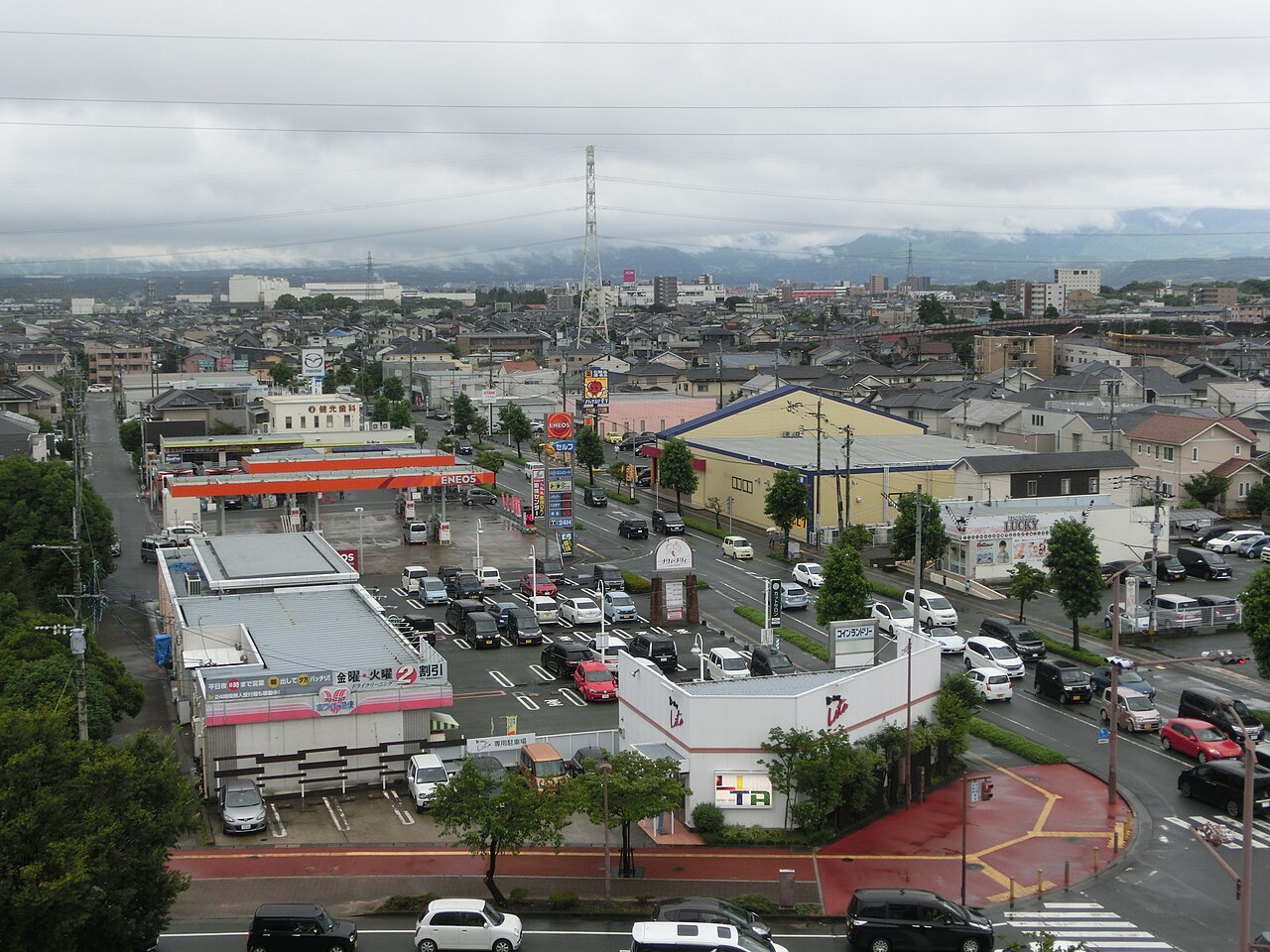
Kikuyo is the direct home of TSMC subsidiary JASM, a small town of 24,000 residents. Between 2022 and 2024, the town has been transformed almost beyond recognition.
| Type | Reference Price per Tsubo (JPY) | Recent Trend |
|---|---|---|
| Commercial land (around JASM) | ¥800K-1.5M | Cumulative double-digit growth over 3 years |
| Residential (within 15 min walk) | ¥350K-600K | Cumulative double-digit growth over 3 years |
| Residential (town edge) | ¥180K-300K | +23.5% YoY in 2024 (Kikuyo residential) |
| Agricultural (potential rezoning) | ¥60K-150K | Visible speculative bid — verify zoning |
Note: figures are reference ranges from published land prices (Yaoki team compilation based on MLIT 2024 data). Actual transaction prices are typically 1.1-1.5× published land prices, depending on property attributes (building age, lot configuration, zoning, road access). For specific deals, consult Yaoki for current market quotes.
Investment Profile
- Steepest growth, but prices have already absorbed three years of double-digit gains
- Suited to short-to-medium-term capital gains (3-5 year holding)
- Strong rental demand (semiconductor engineers, foreign employees, single assignees)
- Rental yield 5-7% (higher on newer properties)
- Drawback: prices are no longer cheap — 2025 entries require careful selection
Who It Fits
Kikuyo is suitable for:
- Investors willing to accept moderate volatility in exchange for higher growth
- Mid-term investors with a 3-5 year holding horizon
- Buyers with trusted local partners and access to on-the-ground intelligence
- Corporate investors with yen-denominated income or hedging capability
Kikuyo has seen "land speculation" — some agricultural parcels have been aggressively bid up by speculators, but development permits are not guaranteed. Buying agricultural land requires extra caution; we recommend confirming zoning with a licensed local realtor (takken-shi); Yaoki can help arrange this.
Koshi — Strong Spillover Effects, Mid-to-Long-Term Hold

Koshi City is adjacent to Kikuyo and is the primary catchment for Kikuyo's overflow demand. Its 2024 population reached 63,000 and continues to grow. Koshi offers several key advantages:
- A 10-15 minute drive from JASM's first fab
- More abundant housing supply at relatively reasonable prices
- A new industrial park planned for post-2026 will absorb additional supply chain firms
- Active municipal investment in infrastructure (schools, hospitals, commercial facilities)
| Type | Reference Price per Tsubo (JPY) | Recent Trend |
|---|---|---|
| Commercial land | ¥350K-650K | Cumulative mid-to-high double-digit growth over 3 years |
| Residential (near Kikuyo border) | ¥200K-380K | +15.8% YoY in 2024 (Koshi residential) |
| Residential (city center) | ¥150K-280K | Cumulative double-digit growth over 3 years |
| Industrial park (in planning) | ¥100K-220K | Currently in public tender |
Note: figures are reference ranges from published land prices (Yaoki team compilation based on MLIT 2024 data). Actual transaction prices are typically 1.1-1.5× published land prices, depending on property attributes.
Investment Profile
- Priced more reasonably than Kikuyo (for comparable property attributes, Koshi published land prices typically run roughly half to 60% of Kikuyo)
- Suited to mid-to-long-term holding (5-10 years)
- Steady rental demand growth (families of semiconductor-adjacent employees prefer Koshi over Kikuyo)
- Rental yield 6-8% (Yaoki team experience range; varies by property)
- New industrial park tenders open opportunities for manufacturer landing
For investors who missed the first wave in 2022-2024, Koshi is the most attractive zone to enter from 2025-2027. It captures the semiconductor spillover effect with a more reasonable price base, and downside risk is lower than Kikuyo.
Kumamoto City Chuo Ward — Traditional Commercial Core, Stable Allocation
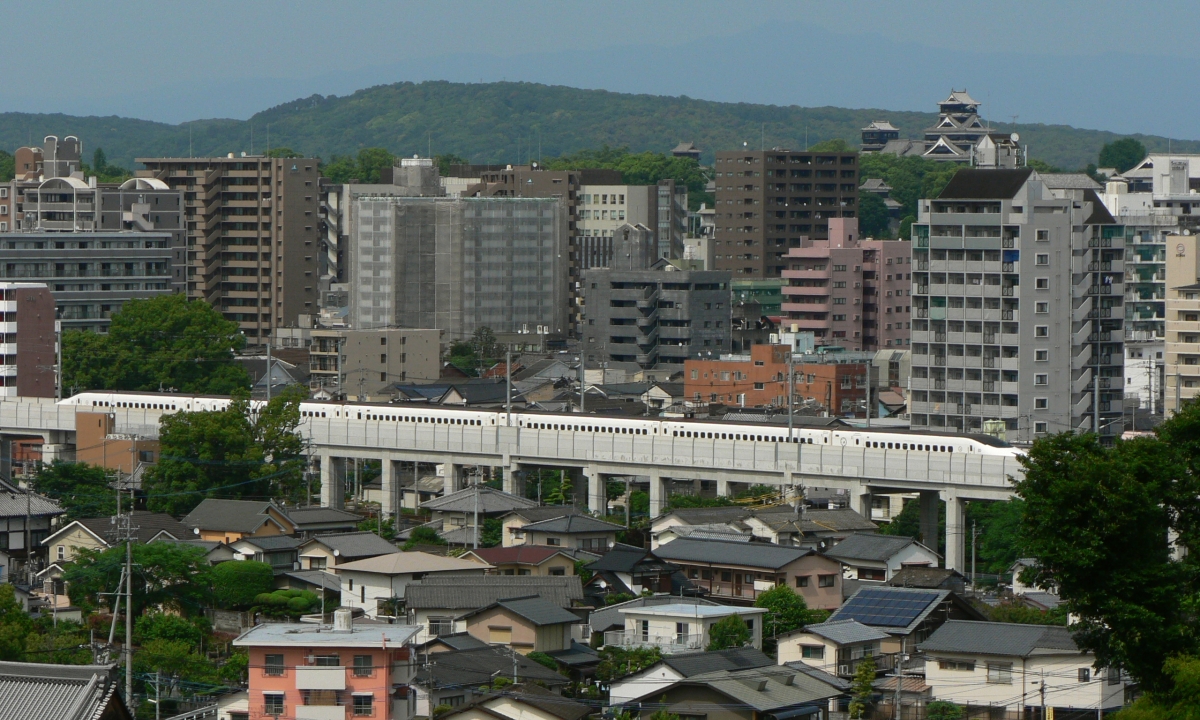
Kumamoto City has approximately 730,000 residents, making it the third-largest city in Kyushu (after Fukuoka and Kitakyushu). The Chuo Ward serves as the traditional commercial core. While its exposure to the semiconductor cluster is indirect, it carries its own demand structure.
| Type | Reference Price per Tsubo (JPY) | Recent Trend |
|---|---|---|
| Chuo Ward commercial land | ¥850K-1.8M | +5.2% YoY in 2024; cumulative mid-range gains over 3 years |
| Chuo Ward residential land | ¥450K-950K | Cumulative single-digit to low-double-digit growth over 3 years |
| Whole-building investment property (Chuo Ward) | ¥350M-1.2B / building | Steady upward trend; wide variance by building age and management quality |
Note: figures are reference ranges from published land prices (Yaoki team compilation based on MLIT 2024 data). Actual transaction prices are typically 1.1-1.5× published land prices; for whole-building deals, variance widens significantly with building age and occupancy.
Investment Profile
- Slower growth, but stable rental income
- Suited to conservative long-term holding (10+ years)
- Active market for whole-apartment-building investments
- Rental yield 4-6% (stable, not flashy)
- Best fit for urban asset allocation rather than speculative gains
Who It Fits
- Conservative investors and family office core allocations
- Investors prioritizing stable rental income over capital gains
- Buyers of income-producing whole buildings
- Investors unwilling to take on Kikuyo-style volatility
Tax and Regulatory Essentials Before You Invest
Japan places no nationality restrictions on foreign buyers — foreign individuals and foreign corporations can both purchase land and buildings. But there are several tax considerations that can catch the unprepared off guard:
Acquisition Phase
- Real estate acquisition tax: assessed value × 3% (residential) or 4% (non-residential)
- Registration license tax: assessed value × 2% (for ownership transfer registration)
- Stamp tax: tiered by contract amount (typically ¥10K-60K)
- Brokerage fee: transaction price × 3% + ¥60K + consumption tax
One-time acquisition costs typically total 6-8% of the transaction price.
Holding Phase
- Property tax (kotei shisan zei): assessed value × 1.4% per year
- Urban planning tax: assessed value × 0.3% per year (in designated areas)
Annual holding costs are roughly 0.3-0.5% of market value (the assessed value is typically 60-70% of market price).
Rental Phase (Critical for Non-Residents)
Non-residents' rental income is subject to 20.42% withholding (genshien choshu) — this is deducted at source by the tenant or rental management company before any remittance to your home country. The excess (over your actual tax liability) can be reclaimed through a Japanese tax filing.
Many investors overlook non-resident withholding and assume rental remittances arrive net — only to discover after the fact that 20% has been taken. Yaoki and our partner tax accountant (zeirishi) build this into the ROI model before contract signing.
Disposal Phase
Capital gains tax on disposal for non-residents:
- Held under 5 years (short-term): 39.63% (income tax 30% + special reconstruction tax 0.63% + resident tax 9%)
- Held 5 years or more (long-term): 20.315% (income tax 15% + reconstruction 0.315% + resident tax 5%)
The 5-year mark is the critical tax watershed — capital gains strategies are almost always structured to align exit timing with this threshold.
Allocation Logic Framework for Three Investor Types
There is no "best zone for everyone" — only "the best combination for your risk structure". Yaoki's clients broadly cluster into three personas. This chapter presents allocation logic via a 3 personas × 3 evaluation dimensions framework — specific amounts and return figures are calculated case-by-case during consultation.
Three Evaluation Dimensions
- Liquidity Need: How soon must your capital be redeemable? Higher short-term liquidity pressure makes high-volatility, low-liquidity exposure less appropriate
- Volatility Tolerance: How much short-term mark-to-market drawdown can you accept? This caps your exposure to high-growth/high-volatility zones like Kikuyo
- Holding Period Preference: Are you targeting 3-5 year capital gains, 5-10 year total return, or 10+ year rental income and capital preservation?
Type A: Aggressive Capital Gains Investor
Three-dimension profile:
- Liquidity Need: Low (other liquidity sources available; capital can be locked for 3-5 years)
- Volatility Tolerance: Moderate to high (comfortable with short-term drawdowns)
- Holding Period: 3-5 year capital gains play, exit timed against the tax watershed
Allocation principles (no specific amounts):
- Core zone allocation: high-growth Kikuyo properties + selectively chosen Koshi assets
- High-volatility allocation ratio: High (Kikuyo exposure can anchor the portfolio)
- Cash reserve ratio: Moderate (preserve optionality for opportunistic entry)
- Tax optimization focus: align with the 5-year holding watershed to access the 20.315% long-term rate
Type B: Balanced Mid-to-Long-Term Investor
Three-dimension profile:
- Liquidity Need: Low to moderate (family office or stable cash flow base)
- Volatility Tolerance: Moderate (steady total return preferred over extreme upside)
- Holding Period: 5-10 years, balancing capital gains and rental income
Allocation principles:
- Core zone allocation: Koshi (growth + rental yield) + Kumamoto City Chuo Ward (whole-building income)
- High-volatility allocation ratio: Moderate (Kikuyo as accent, not anchor)
- Cash reserve ratio: Moderate (balance optionality with deployment)
- Rental structure focus: rental covers holding costs; capital gains as upside
Type C: Conservative Core Asset Allocation
Three-dimension profile:
- Liquidity Need: Low (retirement capital or long-term family trust)
- Volatility Tolerance: Low (no tolerance for visible drawdowns)
- Holding Period: 10+ years; rental income primary, capital preservation secondary
Allocation principles:
- Core zone allocation: Kumamoto City Chuo Ward income-producing whole buildings as primary holdings
- High-volatility allocation ratio: Low (Kikuyo either excluded or minimal)
- Cash reserve ratio: Higher (capital preservation prioritized over full deployment)
- Rental stability priority: high occupancy, sound building condition, manageable operating costs
The differences between the three types are not about "right or wrong" — they reflect different combinations of liquidity need, volatility tolerance, and holding period preference. This chapter provides the framework only — specific cash thresholds, allocation percentages, and ROI ranges are tailored to your case during consultation.
Conclusion: Golden Phase vs Selective Phase
A clear way to frame the timeline for Kumamoto real estate investment:
| Period | Market Characteristics | Investment Strategy |
|---|---|---|
| 2022-2024 (past) | First wave of structural bull market | Broad regional gains, almost any purchase paid off |
| 2025-2027 (golden phase) | Before JASM's second fab comes online; supply chain continues to land | Zone selection becomes critical; Kikuyo shifts to selective, Koshi sprints |
| 2028-2030 (selective phase) | Higher base; broad appreciation slows | Cherry-pick specific deals; avoid chasing highs; rental properties more stable |
| Post-2030 | Entering a stable phase | Normalized long-term holding, primarily rental income |
2025-2027 can be viewed as a relatively reasonable entry window — during this period Fab 1's mass production has been validated and Fab 2's progress is visible, while prices have not yet fully reflected the secondary effects post-Fab 2 (this is a scenario analysis; actual outcomes depend on market and policy dynamics).
Entry remains possible after 2028, but it requires sharper selection and more thorough due diligence.
Information asymmetry tends to widen for late entrants — working with a locally familiar advisor can help reduce the risks of going it alone.
Next Steps
- Identify which investor type fits you (A/B/C — aggressive/balanced/conservative)
- Assess your holding period and capital scale
- Arrange an on-site visit to Kumamoto (3-5 days; Yaoki can help plan)
- Prepare cross-border tax and legal structure (Yaoki can coordinate with partner tax accountants and judicial scriveners)
- Specific property evaluation and offer (Yaoki can support ROI scenarios and due diligence)
References
- MLIT 2024 Published Land Prices — MLIT official site
- JASM (TSMC subsidiary) public information — Wikipedia / TSMC PR
- Kumamoto Nichinichi Shimbun 2024.03 — Kumanichi News
- Higo Bank Semiconductor Cluster Promotion Office report — MOF Archive
- Kumamoto Prefecture Industrial Support Division (subsidy information) — Kumamoto Prefecture official site
- JASM production and headcount update — DigiTimes 2025.04 report
- All Yaoki team estimates referenced in this article reflect industry experience ranges; for specific cases, consult Yaoki for a customized analysis.
Last data update: 2026.05.22 · Refer to the latest official announcements when government policy or market data changes.
Have a specific property in mind?
From property intelligence and zone recommendations to ROI scenarios and on-site visits — the Yaoki team responds within 48 hours. Initial consultations are complimentary, and all information is handled under NDA.
Book a Call