
This topic (Kumamoto real estate investment) will migrate to Yaoki's forthcoming dedicated property advisory site yaoki-homes.jp. This page is kept as transitional reference and has been removed from this site's main listings. For real estate investment inquiries, please contact Yaoki directly.
- 2022 marked the structural turning point for Kumamoto. Per MLIT's 2024 published land prices: Kikuyo commercial land +30.8% YoY (national #2), Ozu commercial/industrial land +33.2% YoY (national #1); net inflow of +3,840 people—the first positive net migration in 33 years Source: MLIT / Kumamoto Nichinichi Shimbun
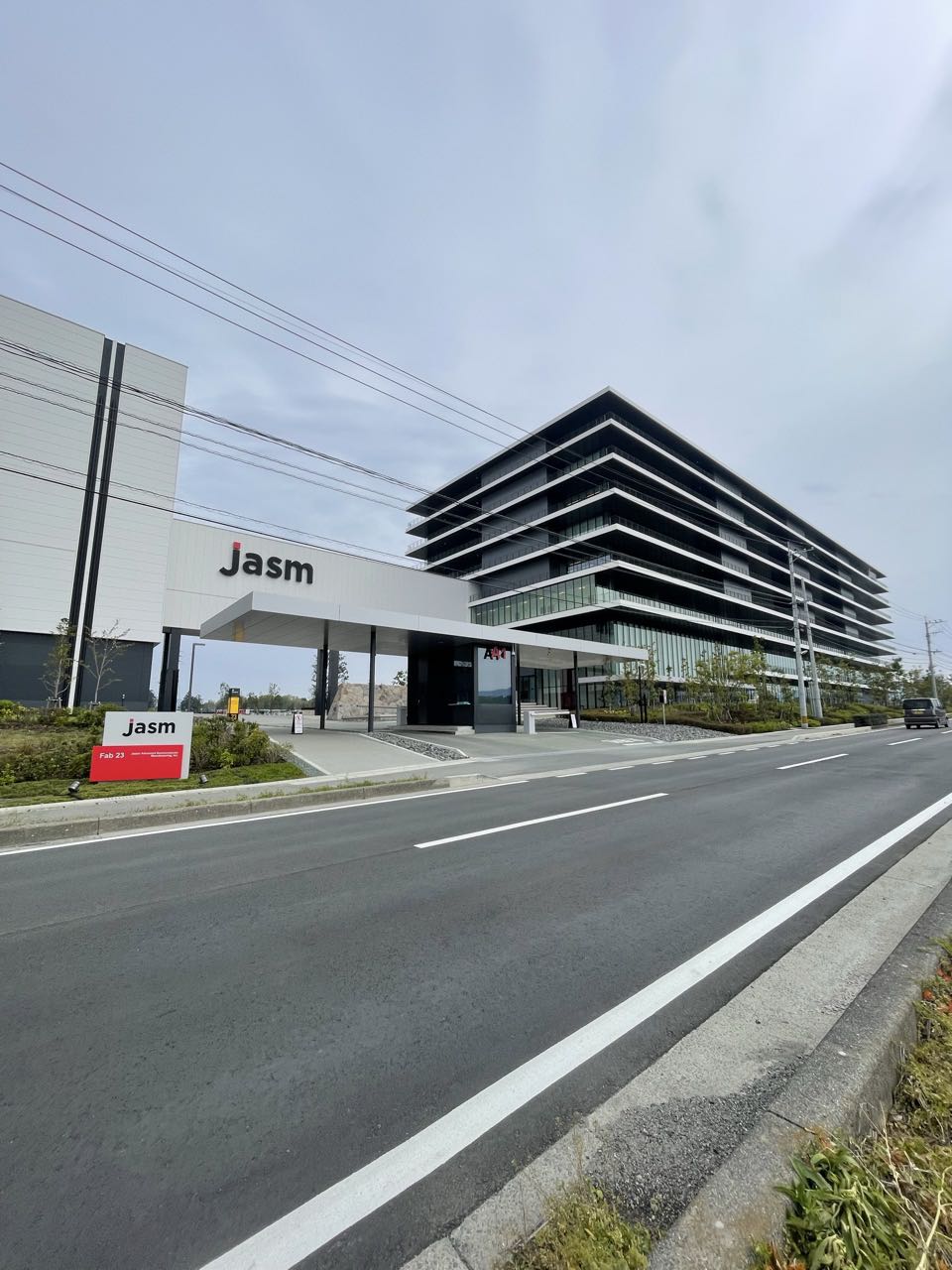
- JASM Fab 1 entered mass production in December 2024 (55,000 wafers/month at 12/16nm FinFET and 22/28nm). Fab 2 launches late 2027 (7nm and 6nm). Two fabs combined: 100,000 wafers/month, total investment over US$20 billion (~¥3 trillion JPY) Source: JASM public disclosures / TSMC PR
- Two fabs combined create 3,400+ high-tech jobs. JASM had hired ~2,400 employees as of April 2025 (including 527 newly hired local residents). 200+ suppliers have already entered Kikuyo and surrounding areas Source: DigiTimes / Higo Bank semiconductor cluster report
- Yaoki team scenario assessment: 2025-2027 is a reasonable entry window—Fab 1 mass production has been validated, Fab 2 progress is visible, and cluster spillover is already extending into Koshi, Ozu, and Kikuchi. 2028+ enters the selective hold phase—single-property selection becomes critical, not segment-sweeping
- Key risks: BOJ rate hikes, geopolitics, TSMC global footprint adjustments, semiconductor cycle. This report provides a three-stage decision framework: entry, hold, exit (scenario analysis; actual outcomes depend on market and policy dynamics)
- The 2022 Structural Turning Point — A Prefecture-Level Economic Reset
- The 2025-2027 Golden Window — Why Now Is the Critical Entry
- Post-Fab 2 Impact — The Second Wave After 2027
- The 2028+ Selective Hold Strategy — When Broad Appreciation Slows
- Semiconductor Cluster Spillover — Fab 3 and Kyushu Diffusion
- Risk Analysis — Rates, Geopolitics, Cycle, Footprint
- Investor Decision Framework — Entry, Hold, Exit
The 2022 Structural Turning Point — A Prefecture-Level Economic Reset
In November 2021, TSMC, Sony, and Denso jointly announced the formation of JASM (Japan Advanced Semiconductor Manufacturing), a subsidiary located in Kikuyo, Kumamoto Prefecture. At the time, many domestic Japanese analysts treated this as "another regional investment project." In hindsight, it was the most significant structural turning point for Kumamoto since 1991.
Before the TSMC announcement, Kumamoto was a typical "net out-migration" rural prefecture—young people moved to Fukuoka and Tokyo for work, land prices barely moved year-over-year with changes mostly within plus or minus 1%. But starting in 2022, three structural indicators reversed simultaneously:
Indicator 1: Land Price Reversal — Two Sites Rank National #1 and #2 in 2024
Per the Ministry of Land, Infrastructure, Transport and Tourism (MLIT) 2024 published land prices (released March 2024):
- Ozu town, three commercial and industrial sites combined: +33.2% YoY (national #1) Source: MLIT / Kumamoto Nichinichi
- Kikuyo 5-1 commercial site: +30.8% YoY (national #2) Source: MLIT / Kumamoto Nichinichi
- Koshi residential land: meaningful spillover appreciation (refer to prefecture's published values)
- Kikuchi and adjacent areas: second-wave diffusion appreciation
- Kumamoto prefecture posted multi-site positive growth — the strongest reading since 1991
Note: an earlier draft said "Kikuyo +30.7% national #1" — this was incorrect. The verified figures per MLIT are "Kikuyo +30.8% national #2; Ozu (three sites combined) +33.2% national #1."
Indicator 2: Population Net Inflow, First Reversal in 33 Years
In 2024, Kumamoto recorded net inflow of +3,840 people, the first positive net migration since 1991. Of these, 25-39 year-olds (the prime working-age cohort) accounted for over 60%. Across Japan's 47 prefectures during the same period, only Tokyo, Kanagawa, Chiba, Saitama, Fukuoka, Okinawa, and Kumamoto recorded positive net migration. Kumamoto is one of the few non-capital-region, non-tourism prefectures to achieve positive growth. Source: Kumamoto Prefecture statistics, MIC migration data
Indicator 3: 200+ Supply Chain Companies Have Entered Kikuyo and Surroundings
Per Higo Bank's semiconductor cluster division reporting, 200+ semiconductor-related supply chain companies have established operations in Kikuyo and surrounding areas (a meaningful expansion from earlier 2024 reads of ~87), including equipment makers (Tokyo Electron, Applied Materials, Lasertec), specialty chemicals (Sumitomo, Shin-Etsu), precision components (multiple Taiwan-Japan joint ventures), and logistics and staffing firms. Each entry brings employee relocation, factory demand, housing demand, and office demand. Source: Higo Bank semiconductor cluster report (MOF archive)
| Key Timeline | Event | Market Implication |
|---|---|---|
| 2021.11 | TSMC × Sony × Denso announce JASM | Structural turning point begins |
| 2022.04 | JASM Fab 1 groundbreaking | First wave of land acquisition |
| 2024.02 | JASM Fab 1 opening ceremony | Cluster land prices peak |
| 2024.12 | Fab 1 mass production begins (55,000 wafers/mo, 12/16nm + 22/28nm) | Real-landing validation |
| 2025.04 | JASM headcount reaches 2,400 (incl. 527 local hires) | Cluster takes shape, employment expanding |
| Late 2027 | Fab 2 launch (7nm + 6nm) | Two-fab combined 100,000 wafers/mo, 3,400+ jobs |
| 2029+ | Fab 3 under evaluation | Long-term outlook unclear |
Kumamoto's real estate bull cycle is structural, not speculative. Short-term volatility will occur, but the long-term trend is supported by real employment, real population, and real supply chain demand—this is "moat-type growth," fundamentally different from the "stable demand" of central Tokyo districts and the "speculative" patterns of Shenzhen Qianhai or Bangkok.
JASM's total investment exceeds US$20 billion (~¥3 trillion JPY), of which the Japanese government has provided approximately US$5 billion in subsidies for Fab 2 alone. Kumamoto Prefecture conservatively estimates cumulative economic contribution from semiconductor investment at ¥6.4 trillion (2022-2031). JETRO and some private institutions estimate higher. Source: JASM Wikipedia / TSMC PR
The 2025-2027 Golden Window — Why Now Is the Critical Entry

Think of the Kumamoto investment window as a curve. 2022-2024 was the "high uncertainty × low price" early phase. 2025-2027 is the "declining uncertainty × still-reasonable price" golden phase. 2028+ becomes the "very low uncertainty × elevated price" plateau phase.
The 2025-2027 golden window is defined by four key drivers:
Driver 1: Fab 1 Validated, Fab 2 Progress Visible
After Fab 1 entered mass production in December 2024 (55,000 wafers/month), TSMC's "real landing" has been validated—not political signaling, but actual capacity. Fab 2 broke ground in 2025 and is targeted for launch in late 2027. Progress is transparent and verifiable. The "will it materialize" risk has dramatically decreased. This is a critical psychological threshold—institutional investors enter at scale only after this point, so individual investors who move before them retain a meaningful price advantage.
Driver 2: Prices Have Not Fully Priced In Fab 2 Effects (Scenario Analysis)
Current Kikuyo commercial land prices reflect the "Fab 1 mass production + first-wave supply chain" demand — but they have not yet fully reflected the second-wave supply chain and family settlement demand following Fab 2 launch. Key drivers to watch:
- Two-fab combined headcount reaching 3,400+ post-Fab 2, driving rental and housing demand
- Kikuyo already has 200+ suppliers with continued expansion expected
- Diffusion gradients across Kikuyo, Koshi, Ozu, and Kikuchi will differ
- BOJ rate path and foreign-investor FX dynamics
The above is Yaoki team scenario analysis. Actual segment performance depends on market supply-demand, policy dynamics, and case-specific factors. For specific deal analysis, contact Yaoki.
Driver 3: Infrastructure Acceleration
Several critical infrastructure projects complete during 2025-2027, directly supporting land values:
- Kyushu Expressway Kikuyo IC expansion (completed 2026)
- JR Hohi Line service increase (phased 2026-2027)
- New Koshi Industrial Park Phase 2 (operational 2027)
- Kikuyo new commercial district plan (announced 2026, completed 2028)
- Kumamoto Airport access road upgrade (completed 2027)
Driver 4: Yen Remains Relatively Weak
In 2024-2025, the yen against USD and TWD remains relatively weak. For cross-border investors from Taiwan, Hong Kong, and Singapore, the same home currency can now purchase 25-40% more Japanese real estate compared to five years ago. Even if subsequent BOJ rate hikes strengthen the yen, current entry still benefits from the FX advantage.
| Segment | Structural Profile | 2025-2027 Scenario Direction | Key Drivers |
|---|---|---|---|
| Kikuyo commercial | Cluster core, 200+ suppliers | Fab 1 priced in; Fab 2 second wave pending | Retail demand, employee density |
| Kikuyo residential | Closest to JASM, family preference | Structural demand still accumulating | Schools, childcare, commute |
| Koshi residential | Kikuyo spillover absorption, price advantage | Spillover activating | Roads, JR access, new supply |
| Ozu | 2024 published land #1 nationally | Significant response already; policy-dependent | Industrial land, logistics |
| Kikuchi residential | Second-wave diffusion, relative price advantage | Long-tail cluster spillover | Commute time, livability |
This table is Yaoki team scenario analysis, not a specific price forecast. Actual transaction prices follow MLIT published values and live market dynamics — refer to the latest official disclosures. For specific property valuation and ROI modeling, contact Yaoki.
Although prices were lower in 2022-2023, the questions of "will TSMC actually land," "will Japanese government subsidies materialize," and "will the supply chain follow" were all open. Entry at that time required absorbing extreme "structural uncertainty risk."
2025-2027 is the phase where "uncertainty has fallen sharply + price has not yet fully priced in"—on a risk-adjusted basis, this can be viewed as a relatively reasonable entry window (scenario analysis; actual outcomes depend on individual cases and market dynamics).
Post-Fab 2 Impact — The Second Wave After 2027

JASM Fab 2 is targeted to launch in late 2027, producing 7nm and 6nm process nodes (vs. Fab 1's 12/16nm FinFET and 22/28nm). This means a higher process tier, denser staffing, and more precision equipment. The post-Fab 2 second-wave effects include: Source: JASM / TSMC PR
Effect 1: Two-Fab Combined Creates 3,400+ High-Tech Jobs
As of April 2025, JASM had hired approximately 2,400 employees (including 527 newly hired local residents). Following Fab 2 launch, the two fabs combined create 3,400+ high-tech jobs. Source: DigiTimes April 2025
Critically, these employees are predominantly engineers earning relatively high salaries (industry-range annual income ¥8M-15M). Combined with second-wave supply chain employees, their consumption power and family expenditure will boost Kumamoto's local services and real estate demand. The total cluster employment count (including supply chain) is expected to continue to accumulate per government and industry estimates — refer to official disclosures for specific figures.
Effect 2: Second-Wave Supply Chain Entries
The more advanced Fab 2 process will attract additional precision chemicals, specialty gas, photomask, inspection, and metrology equipment suppliers. Kikuyo and surrounding areas already host 200+ suppliers, and the Yaoki team's qualitative assessment is that meaningful net additions remain possible during 2026-2028 — refer to industry statistics and prefectural disclosures for specific counts. Source: Higo Bank semiconductor cluster division
Effect 3: Rental Market (Scenario Analysis)
The most immediate real estate impact after Fab 2 launches is the rental market — a wave of single or expatriate-assigned employees creates near-instant rental demand. Key drivers:
- New-apartment occupancy in Kikuyo and Koshi, and the pace of new-supply release
- Rent levels will depend on the supply-demand gap and the mix between family-type and single-occupancy units
- Supply elasticity of short-term apartments and service apartments
- Liquidity of 1K-1LDK units (preferred by single employees)
The above is scenario analysis. Actual rents and occupancy follow live market dynamics. For specific segment rent research, consult Yaoki.
Effect 4: Commercial and Office Demand
Expanding employee population drives commercial demand — convenience stores, restaurants, drugstores, daycare, cram schools, clinics, and gyms expand, creating new retail and office space demand. The pace of Kikuyo and Koshi commercial land response depends on supply-chain arrival pace, family settlement rhythm, and infrastructure delivery.
Many investors think: "wait until late 2027 when Fab 2 truly launches and the heat is visible, then enter." But by the time heat is visible, prices have usually already moved up a wave — entry costs rise significantly for late movers.
The Yaoki team's view is that the reasonable entry timing is the phase where "certainty is visible but price has not yet fully priced it in" — that is, 2025-2026 (scenario analysis; actual outcomes vary by case).
The 2028+ Selective Hold Strategy — When Broad Appreciation Slows
After 2028, the Yaoki team's assessment is that Kumamoto real estate will enter the selective hold phase — market-wide appreciation slows, individual property differentiation widens, and property selection capability rises in weight. The following is scenario analysis; actual outcomes depend on market and policy dynamics.
Why 2028+ May Be the "Selective" Phase — Key Drivers
Three structural changes that may end the era when "buying anything will win":
- Elevated base: Kikuyo commercial land's cumulative appreciation is meaningful (refer to MLIT published values); chasing further carries significant risk
- Supply gradually released: New apartments and commercial buildings complete; some segments may shift from undersupply to oversupply
- Hot-money structure differentiates: Institutional investors begin selecting properties, not sweeping segments; individual speculative buyers exit
Three Strategies for the Selective Phase
Strategy A: Focus on Yield-Type Properties
Capital gains compress in 2028+, but rental demand remains strong. Investors should shift allocation from "capital-gains-oriented" to "rental-yield-oriented"—prioritizing properties with stable location, age, management quality, and tenant structure.
Strategy B: Select for "Structural Demand"
Not all segments will continue to appreciate—only individual properties where "structural demand is still accumulating" deserve deployment. Indicators include:
- Within 15-min walk to JASM or major supply chain facilities
- Near JR stations or major thoroughfares
- Concentrated family-need zones (schools, childcare, healthcare)
- Land with rezoning or development potential
Strategy C: Cross-Segment Balanced Allocation
From 2028, investors should no longer concentrate on a single segment. Balanced allocation across Kikuyo, Koshi, and central Kumamoto City reduces downside concentration risk.
| Period | Market Characteristic | Winning Strategy | Failure Mode |
|---|---|---|---|
| 2022-2024 (passed) | Market-wide rally, low certainty | Courage to enter, broad coverage | Over-waiting, miss the first wave |
| 2025-2027 (golden) | Certainty rising, price reasonable | Segment selection, accelerated deployment | Wait until 2027, chase highs |
| 2028-2030 (selective) | Broad slowdown, property differentiation | Selective single-property, yield orientation | Continue capital-gains thinking |
| 2031+ (steady state) | Long-term stable phase | Hold, rental income as core | Mistake for decline, exit too early |
Semiconductor Cluster Spillover Scenarios — Fab 3 and Kyushu Diffusion
Kumamoto real estate's second growth engine after 2028 comes from two directions: the possibility of JASM Fab 3, and cluster spillover to other Kyushu cities. The following is scenario analysis; actual outcomes depend on policy, market, and corporate-decision dynamics.
JASM Fab 3: Still Under Evaluation
TSMC, Sony, and Denso's official position on JASM Fab 3 is "subject to market demand and Fab 2 operational status." The Yaoki team's qualitative assessment places approval probability in the moderate range. Key uncertainties:
- Global advanced-node demand (AI / HPC / automotive semis) sustainability
- TSMC Arizona progress and yield (resource competition effect)
- Japanese government subsidy strength (Japan has already provided approximately US$5 billion in subsidies for Fab 2; Fab 3 subsidy scale remains undetermined) Source: JASM
- Kumamoto electricity and water supply (groundwater nearing capacity)
If Fab 3 is approved, the target timeline is 2029-2030 groundbreaking, 2032+ mass production, adding additional high-tech jobs (specific scale to follow official disclosures). The real estate impact would be a "third structural heat wave" after 2032 — but delayed in time and lower in certainty vs. the first two fabs. Investment decisions should not assume Fab 3 will definitely be approved.
Kyushu Spillover: Four Beneficiary Cities
Even without Fab 3, the cluster effect from the first two fabs will spill over to other Kyushu cities. Yaoki identifies four key beneficiaries:
| City | Distance from JASM | Benefit Logic | Long-term Potential |
|---|---|---|---|
| Ozu (Kumamoto) | 15 min | Residential spillover, Kikuyo saturation absorption | ★★★★☆ |
| Kikuchi (Kumamoto) | 30 min | Price advantage, supply chain expansion | ★★★☆☆ |
| Fukuoka (South) | 60-90 min | Cross-prefecture commuter pool, corporate HQs | ★★★★☆ |
| Kitakyushu | 2 hours | Manufacturing cluster synergy, port logistics | ★★★☆☆ |
Once core Kumamoto segments (Kikuyo, Koshi, Kumamoto City) are allocated after 2028, the next phase can consider Ozu and Kikuchi, capturing the second wave of diffusion. South Fukuoka falls into "cross-prefecture synergy" allocation, appropriate for larger capital pools seeking diversification.
Risk Analysis — Rates, Geopolitics, Cycle, Footprint

No investment is risk-free. Kumamoto's window appears structurally certain, but four risk categories require identification, quantification, and pre-hedging. The following risk matrix is scenario analysis — probability and impact ratings are Yaoki team qualitative estimates; actual outcomes depend on market and policy dynamics.
Risk Matrix
| Risk Category | Probability | Impact | Hedge Strategy |
|---|---|---|---|
| BOJ rate hike acceleration | Medium | Medium | Lock 5-10yr fixed rate, reduce leverage |
| Geopolitics (Taiwan Strait spillover) | Low-Medium | High | Multi-market allocation, avoid single-location concentration |
| Semiconductor cycle downturn | Medium | Medium | Focus yield properties, avoid high-leverage short arb |
| TSMC global footprint shift | Low | High | Do not over-rely on Fab 3, base case on Fabs 1-2 |
| Rapid yen appreciation | Medium | Low-Medium | Phased entry, retain cash position |
| Kumamoto water resource constraint | Low-Medium | Medium | Avoid heavy groundwater-dependent projects |
Risk 1: BOJ Rate Hikes
The BOJ rate hike cycle began in 2024-2025, but the policy rate remains around 0.5%—still extremely accommodative vs. Europe and the US. Direct impact on Kumamoto real estate is limited: the bull cycle is driven by real employment and supply chain demand, not pure liquidity. However, foreign arbitrage of "borrow yen, buy Japanese real estate" will narrow, potentially slowing institutional investor pace. Yaoki recommends locking 5-10 year fixed-rate mortgages.
Risk 2: Geopolitics
Rising Taiwan Strait risk could affect TSMC's global footprint and the strength of Japanese government semiconductor subsidies. But the reverse may also hold—Japan (as a "far from geopolitical hot zone" manufacturing backup) may become a more strategically important semiconductor base. The net effect is hard to judge, but concentrating all assets in a single geography is unwise.
Risk 3: Semiconductor Cycle
Semis run a 3-5 year cycle. If 2027-2028 enters a downcycle, JASM utilization could decline and new supply chain additions could slow, dampening rental market heat below expectations. Focusing on yield properties rather than short-term arbitrage is the key hedge.
Risk 4: TSMC Global Footprint Shift
TSMC has announced US, Germany, and Japan multi-fab footprints. If global growth slows and TSMC contracts capex, Fab 3 approval probability decreases — but Fabs 1-2 operations are unaffected (Fab 1 is already in mass production; Fab 2 broke ground and has received approximately US$5 billion in Japanese government subsidy). Investment decisions should not assume "Fab 3 will definitely be built".
Yaoki's general advice: before entering, run a worst-case stress test combining rate hikes, a cycle downturn, and Fab 3 not being approved. If your cash flow and liquidity remain workable under that scenario, then proceed with the final decision.
Investor Decision Framework — Entry, Hold, Exit
Combining the analysis from chapters 1-6, Yaoki proposes a complete three-stage investor decision framework to help you identify your current phase and required decision.
Stage 1: Entry Timing
Key question: Is entry still reasonable now?
Three checkpoints:
- Certainty check: JASM Fab 1 mass-producing, Fab 2 progress verifiable → structural risk has dropped sharply ✓
- Price check: Kikuyo commercial highly elevated, but Koshi, Ozu, and Kikuchi still in reasonable range ✓
- Personal readiness check: Tax structure, cross-border remittance, professional team in place → depends on individual
All three pass → 2025-2027 remains a reasonable entry window. If any fails, address it before entry.
Stage 2: Holding Period Planning
Key question: How long should I hold?
| Investor Type | Recommended Hold | Primary Return Source | Exit Trigger |
|---|---|---|---|
| Short-medium capital gains | 3-5 years | 70% capital gains + 30% rent | 5-year tax threshold + Fab 2 peak heat |
| Medium-long hold | 5-10 years | 50% capital gains + 50% rent | 2030-2032 appreciation slowdown assessment |
| Conservative long-term | 10+ years | 70% rent + 30% capital gains | Do not exit; convert to pure rental asset |
Stage 3: Exit Strategy
Key question: When to sell, to whom, how to optimize tax?
Three exit signals (simultaneous occurrence = "structural cooling"):
- JASM employee count stabilizes (no further expansion)
- Supply chain entry slows (under 10 new firms per year)
- Kikuyo commercial land appreciation below 5% (two consecutive years)
Tax Optimization Principles:
- Hold 5+ years before selling (capital gains tax drops from 39.63% to 20.315%)
- Avoid selling during accelerated BOJ hike phases (buyer mortgage conditions worsen, bids weaken)
- Phased exit (avoid lump-sum tax impact)
Buyer Structure: From 2028+, primary buyers will be Japanese domestic real-demand families, institutional investors (REITs, family offices), and a smaller portion of late-stage cross-border capital. Building relationships early and establishing a strong property management track record creates leverage at exit.
The Kumamoto investment window can be viewed as a curve: 2022-2024 was the "high uncertainty × low price base" early phase, 2025-2027 is the "uncertainty declining × prices still relatively reasonable" phase, and 2028-2030 enters a "case-by-case selectivity widens" phase (scenario analysis; actual outcomes depend on market and policy dynamics).
For investors still not deployed as of 2025, 2025-2027 remains a risk-adjusted reasonable entry window—not the cheapest, but with markedly improved certainty.
Late entry does not mean missing out—but it requires sharper analysis and more thorough due diligence. Yaoki's role is to help reduce cross-border information asymmetry and provide on-the-ground coordination; final investment decisions and returns rest with the investor.
Next Steps
- Identify your investor type (short-medium / medium-long / conservative long-term)
- Assess holding period and capital scale, including worst-case stress test
- Arrange a Kumamoto site visit (3-5 days; Yaoki can help plan)
- Prepare cross-border tax and legal structure (Yaoki can coordinate with partner tax accountants and judicial scriveners)
- Specific property evaluation and bidding (Yaoki can support ROI modeling, due diligence, and negotiation)
References Cited in This Article
- JASM (TSMC subsidiary) public disclosures — Wikipedia / TSMC PR
- JASM April 2025 employment status (incl. 527 local new hires) — DigiTimes April 2025
- MLIT 2024 published land prices (Kikuyo +30.8% national #2, Ozu +33.2% national #1) — MLIT
- Kumamoto Nichinichi Shimbun March 2024 land-price reporting — Kumamoto Nichinichi
- Higo Bank semiconductor cluster division report (200+ suppliers in Kikuyo) — MOF archive
- Kumamoto Prefecture Industry Support Division — Kumamoto Prefecture
- All Yaoki team scenario estimates in this article (e.g., golden-window framing, selective-hold pacing, rental scenario discussion, Fab 3 probability) are scenario analysis within industry experience ranges; for case-specific advice contact Yaoki for customized analysis.
Last updated: 2026.05.22 · Refer to the latest official disclosures for any updates to government policy or market data.
Want to assess your entry timing?
From window analysis, segment recommendation, ROI modeling, to on-site visit planning—Yaoki responds within 48 hours. First consultation is free, all information protected by NDA.
Book Consultation