
- Setup timeline varies by scale: small light industry or leased existing facilities can be around a year; most mid-sized manufacturers fall in the one-to-one-and-a-half year range; large semiconductor-related plants typically take one and a half to two years. Claims of "fast landing" often come from misreading individual legal deadlines and do not apply to total factory setup
- The overall timeline is determined by three "critical paths that cannot be shortened": Business Manager visa, bank account opening, and subsidy certification. All three must run in parallel — if any single one falls behind, it blocks the entire project
- Business Manager visa (経営・管理ビザ) review averages around half a year per Immigration Services Agency public data. The 2025/10/16 reform tightened scrutiny further (capital ¥30M, 1 full-time employee, Japanese B2, 3-year management experience or master's, and a business plan evaluation by certified tax accountant / CPA / SME consultant)
- Bank account opening for foreign capital takes several months — megabank standard review is shorter, but for foreign-capital entities whose representative has no in-country base, additional UBO, business plan, and operational-substance review commonly takes several months or more
- Subsidies must be filed before construction — the Kumamoto Prefecture Investment Promotion Subsidy requires the certification application within the statutory window before construction starts. Filing after groundbreaking forfeits eligibility outright
- Use-district (用途地域) misjudgment is the most fatal failure mode — re-zoning takes several months to over a year, and in some cases is impossible. Must be confirmed by a real estate agent (宅建士) during preliminary due diligence
- Why Factory Setup Takes Longer Than Expected
- Why It Cannot Be Shortened: The Three Critical Paths
- The 12-18 Month Monthly Roadmap
- Five Common Failure Modes (with Official Sources)
- Are You 12, 18, or 24 Months? Manufacturer Type Comparison
- Go/No-Go Decision Checklist: What to Inventory Before You Decide
- References & Sources
Why Factory Setup Takes Longer Than Expected
When Taiwanese manufacturing executives ask "how long does it take to set up a factory in Japan," the answers they receive can range from a few months to well over a year. The reason isn't vendor inexperience — it's that "setting up a factory in Japan" covers a very wide range of scenarios. Leasing an existing facility for service-type operations is a very different project from building a new semiconductor-related plant, and the timeline can differ from half a year to two years or more.
More importantly, newcomers often mistake "the statutory deadline for a single permit procedure" (for example, certain filings that must be submitted a fixed period before construction starts) for "the total setup timeline." Treating a local deadline as the overall baseline leads to misaligned finance, personnel, and customer commitments.
The Reasonable Baseline Is "One Year to One and a Half Years"
Based on JETRO's investment guide, Immigration Services Agency public review-period information, and each megabank's public information, the realistic baseline for foreign-capital setup from decision to pilot operations is around one year to one and a half years, distributed by scale and type as follows:
- Around one year: leased existing facility + GK entity + small team (service / trading types)
- About one to one and a half years: owned facility renovation or partial new build + KK entity + multi-tier subsidies + 2-3 dispatched personnel (most manufacturing types)
- About one and a half to two years: large new construction + Factory Location Act pre-notification + environmental review + large-scale dispatch (semiconductor-related)
Individual cases fall somewhere in this range. The key variables that determine where you land are manufacturer type × facility type × dispatch scale × subsidy program complexity.
Think of the Timeline as Parallel Workstreams, Not Sequential Steps
Setup projects are often imagined as a single sequential chain — finish research, then form the entity, then open the bank account, then buy the facility. In practice, most stages must run in parallel: once the entity is registered, bank account opening, Business Manager visa application, subsidy planning, and facility contracts must all start simultaneously, or the overall timeline gets dragged down by any single node.
This brings us to a fundamental project-management insight: the total project timeline is not "the sum of all tasks" but "the length of the critical path." Many tasks can run in parallel, but if any one path cannot be shortened, the entire project is constrained by it.
The next chapter unpacks: which three critical paths set the floor for Kumamoto factory setup timelines, and why they cannot be shortened.
Why It Cannot Be Shortened: The Three Critical Paths

Project management has a basic principle: a project's total timeline is not "the sum of all work" but "the length of the critical path". Many tasks can run in parallel, but if any single path cannot be shortened, the whole project is bound by it.
Kumamoto factory setup has three critical paths that cannot be shortened, each with an official statutory deadline or review cycle as its floor. Understanding these three paths is understanding "why 12-18 months."
Critical Path 1: Business Manager Visa (経営・管理ビザ) — Average 169 Days
Until dispatched personnel arrive in Japan, they cannot serve as the entity representative for bank account interviews, facility signings, subsidy hearings, or other critical procedures. So this path defines the "personnel-in-place floor" of the setup project.
Per the Immigration Services Agency's published "Residence Status Review Processing Period" data (January 2025):
- Certificate of Eligibility (CoE) review averages around half a year (refer to the Agency's latest published data for current periods)
- Large jurisdictions like Tokyo and Osaka generally exceed the average
- The quality of the applicant's business plan, prior experience, and the company's actual operational status all affect review time
The new rules effective October 16, 2025 significantly tightened the review:
- Capital threshold raised 6× from ¥5,000,000 to ¥30,000,000 (30 million yen)
- Mandatory hiring of at least 1 full-time employee (Japanese national, special permanent resident, permanent resident, etc.)
- The applicant or the full-time employee must demonstrate Japanese B2 proficiency (JLPT N2 band)
- The applicant must have 3 or more years of management experience or a relevant master's degree
- The business plan must include an evaluation by a certified tax accountant (税理士), CPA (公認会計士), or registered SME consultant (中小企業診断士)
So this path's earliest completion is filing at M3-M4 and obtaining CoE at M8-M9. Before that, anything requiring the dispatched representative's in-person handling is blocked.
Critical Path 2: Bank Account Opening — 2-3 Months for Foreign Capital
Without a bank account, capital injection cannot complete; without capital in place, the facility's final payment cannot be paid, and the "operational substance proof" required for subsidy applications cannot be established. So this path defines the "capital-in-place floor."
Per each megabank's public information:
- Standard review period: 2 weeks to 1.5 months
- MUFG (三菱 UFJ 銀行): typically 1 to 1.5 months
- Foreign-capital entities whose representative has no in-country base: typically 2 to 3 months or more in practice
Bank internal review focal points for foreign capital:
- Ultimate Beneficial Owner (UBO) declaration and supporting evidence
- Business plan (must be consistent with the visa application's business plan)
- Proof of operational substance (facility contract, employment contracts, customer contracts, etc.)
- Representative's in-person interview in Japan (required in most cases)
Critical Path 3: Subsidy Certification Application — Must Be Filed Before Construction Starts
The subsidy timeline constraint is not "long review" but "irreversible application timing". Per the Kumamoto Prefecture Investment Promotion Subsidy guidelines, the certification application must be filed within the statutory window before construction begins (refer to the prefecture's latest published guidelines for the current required window).
This means:
- Applying after construction starts = automatic disqualification, with no remedy or re-application window
- Subsidy certification review typically takes several months, so from application to approval, facility construction must be pushed back accordingly
- If subsidies are a key variable in the setup's financial plan, the overall timeline is forcibly extended by them
How the Three Paths Determine the Total Timeline
Assuming everything goes smoothly, no delays on any path, and high parallelism:
- M1-M2: preliminary research + zoning confirmation
- M2-M3: entity registration complete (the prerequisite for launching other paths)
- M3 launch Business Manager visa → M8-M9 CoE issued
- M3 launch bank account opening → M5-M6 account opened
- M5-M6: subsidy certification application (facility contract already signed)
- M7-M9: subsidy approval + Factory Location Act notification + construction starts
- M9-M15: facility construction / renovation
- M15-M18: equipment installation + pilot operations
The longest of the three paths (Business Manager visa, averaging around half a year) + facility construction (typically half a year to a year) + preliminary work (several months) totals about a year to a year and a half or more. Even under ideal conditions, going below a year is extremely difficult.
The next chapter expands this structure into a "what to do each month" monthly roadmap.
The 12-18 Month Monthly Roadmap
The roadmap below uses "mid-sized manufacturer (KK entity, owned facility renovation, 2-3 dispatched personnel, prefectural subsidy applied)" as the baseline, laid out as a Gantt chart. Large semiconductor-related plants should multiply by 1.3-1.5×.
M1-M2: Preliminary Research & Site Selection
Main work:
- Market research and initial positioning (customer structure, capacity planning, three-year investment budget)
- Location comparison (Kikuyo Town / Ozu Town / Koshi City / Higashi Ward, Kumamoto City)
- Real estate agent (宅建士) confirms candidate land's use district (用途地域), building coverage ratio, floor area ratio, water/drainage and power capacity
- Factory Location Act pre-notification obligation confirmation (mandatory for ≥9,000 m² land or ≥3,000 m² building)
- Three-layer subsidy pathway table (prefectural / municipal / national) — aligned with the construction-start date
- Due diligence reports on 2-3 candidate sites or facilities (soil, land category, ownership, past use)
- Initial tax structure recommendation (KK vs GK, consumption tax, payroll tax)
End of M1-M2 must produce: clear location, clear budget, clear subsidy pathway — none can be missing, or the next stage will be forced to backfill.
M2-M3: Entity Setup
KK vs GK decision (statutory setup fees per Japan National Notaries Association and Yayoi public information):
| Item | KK (Kabushiki Kaisha / 株式会社) | GK (Godo Kaisha / 合同会社) |
|---|---|---|
| Statutory setup fee | ~ ¥200,000-¥240,000 | ~ ¥60,000-¥100,000 |
| Social credibility | High (traditional large-corp form) | Mid (gradually accepted) |
| Governance | More rigid (board, shareholder meeting) | Flexible (member agreement) |
| Suitable for | Manufacturing, IPO-track | R&D, trading, small-scale services |
| Tax | Same (corporate tax) | |
Specific work items:
- Draft articles of incorporation (定款) — commission a judicial scrivener (司法書士)
- Notarization of articles (公証役場, required for KK) — notarization fee ¥30,000-¥50,000 (depending on capital)
- Capital deposit certificate (after converting foreign currency to JPY into the designated account)
- Registration application (Legal Affairs Bureau / 法務局) — registration certificate issued in 1-2 weeks
- Production of corporate seals (representative seal, bank seal, square seal)
- File post-event report to the Bank of Japan within the statutory window after entity setup (refer to Bank of Japan public guidance for current period)
M3-M9: Three Critical Paths Launch in Parallel
Once entity registration is complete, launch the three critical paths immediately — these cannot be shortened and must start as early as possible:
| Path | Launch | Expected Completion | Main Work |
|---|---|---|---|
| Business Manager visa (CoE) | M3 | M8-M9 | Business plan (with tax accountant / CPA / SME consultant evaluation), applicant's experience documents, employment contract, capital proof |
| Bank account opening | M3 | M5-M6 | File at 2-3 banks simultaneously (regional + city banks), UBO declaration, representative's in-person interview in Japan |
| Subsidy certification application | M5-M6 | M7-M8 approval | Business plan, investment-amount table, hiring commitment letter, facility contract — must complete within the statutory window before construction starts |
Parallel work during this window:
- Facility contract signing (with real estate agent's Important Matters Explanation, contract clause confirmation, deposit / key money payment)
- Factory Location Act pre-notification (if a specific factory, filed within the statutory window before construction, per METI)
- Tax accountant engagement, payroll system selection (freee, MoneyForward, Yayoi)
- Procure qualified invoice issuer (適格請求書発行事業者 / Invoice System) registration
M9-M15: Facility Construction / Renovation + Staffing
Facility work:
- Existing facility renovation: 1-3 months
- Mid-sized new construction: 6-9 months
- Large new construction (semiconductor-related): 9-12 months or more
Staffing:
- Dispatched personnel (with CoE) enter Japan, exchange for residence cards
- Housing arrangement (typically company-leased corporate housing / 借上社宅)
- Recruit local core positions through Kumamoto Labor Bureau and local recruiting firms (plant manager, QA, production supervisor, admin, finance)
- Labor contracts (雇用契約書) — must comply with Labor Standards Act
- Work rules (就業規則, mandatory for ≥10 employees) submitted to the Labor Standards Inspection Office
- Enrollment in the four social insurance schemes (health, pension, employment, workers' compensation)
M15-M18: Equipment Installation + Pilot Operations
- Equipment arrives via sea/air at Kumamoto Port or Hakata Port
- Customs clearance and provisional consumption tax (refundable later)
- Equipment installation, water/drainage and power connection
- Fire safety inspection (all industries); environmental impact confirmation (manufacturing — under specific conditions)
- Pilot run and QA process validation
- Build local relationships (mayor visit, Chamber of Commerce membership, local vendor trust)
The M15-M18 window reaches an "operational" state, but achieving designed capacity (production ramp-up) typically requires another 3-6 months. The total timeline (from decision to ramp-up) for large semiconductor-related facilities generally falls in the 18-24 month range.
Five Common Failure Modes (with Official Sources)
Based on JETRO investment guides, Immigration Services Agency review materials, and broadly observed administrative scrivener industry experience, foreign-capital factory setup failures concentrate in five patterns:
Failure Mode 1: Wrong Zoning / Land Category
The acquired land turns out to be in an "Urbanization Control Area (市街化調整区域)," "agricultural land (農地)," or an industrial zone whose use district does not permit the intended facility type. Re-zoning takes 6-12 months, and in some cases (e.g., farmland conversion, Urbanization Control Areas) is simply not possible. Mitigation: during M1-M2 due diligence, a real estate agent (宅建士) must confirm use district, building coverage ratio, floor area ratio, and Factory Location Act obligations. The tens of thousands of yen saved in due diligence may prevent millions of yen in decision-recovery costs.
Failure Mode 2: Bank Account Blocked
Rushing to apply without preparing the Ultimate Beneficial Owner (UBO) declaration, business plan, or representative's in-Japan interview — bank internal review typically extends 2-3 months or more. Capital injection delays then cascade into facility final-payment delays, subsidy "operational substance" proof failure, and missing documentation for visa-required capital evidence. Mitigation: immediately after entity registration at M3, launch parallel applications at 2-3 banks and schedule the representative's in-person interview in Japan.
Failure Mode 3: Business Manager Visa Timeline Underestimated
Per Immigration Services Agency public data, Certificate of Eligibility review averages around half a year (refer to the Agency's latest published periods for current figures). The 2025/10/16 reforms tightened scrutiny further (requiring evaluation by certified tax accountant, CPA, or registered SME consultant). Many manufacturers plan based on older expectations, delaying dispatched personnel arrival. Mitigation: start preparation at M3, file by M3-M4, and prepare Plan B (short-term business visa bridge, PEO/EOR for temporary dispatch).
Failure Mode 4: Missed Subsidy Window
The Kumamoto Prefecture Investment Promotion Subsidy and most similar programs require certification application within the statutory window before construction starts (per the prefecture's published guidelines — refer to the latest publication for the current required window). Applications filed after construction has begun automatically forfeit eligibility — this is an "irreversible" timing point with no remedy or re-application window. Mitigation: complete the subsidy timeline during M1-M2 due diligence, scheduling the construction-start date late enough to leave room for review.
Failure Mode 5: Ignoring Union and Local Relations
Some manufacturers assume "Japanese employees follow rules, no relationship-building needed" — only to face union pushback, local environmental complaints, and vendor friction in early production. In Japanese business culture, "pre-coordination (根回し)" and "equal local participation" are tacit prerequisites. Mitigation: before facility groundbreaking at M9, visit the town/city mayor, join the Chamber of Commerce (商工会議所), and build trust with local vendors.
These five failure modes are not "capability problems" — they are "timing and sequence problems." Distributing the five risks across the right time slots to avoid concentrating them at the final stage is the core value of structured 12-18 month planning.
Are You 12, 18, or 24 Months? Manufacturer Type Comparison
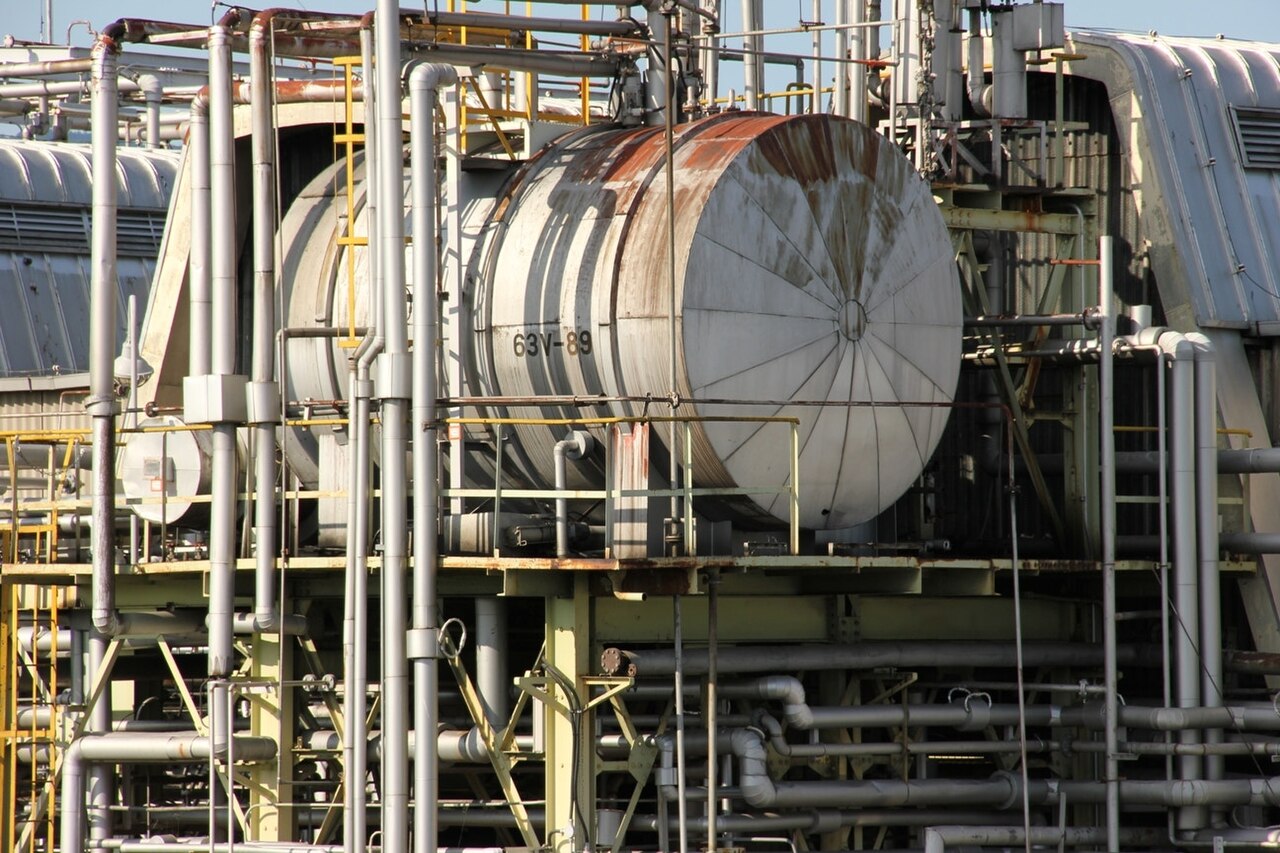
"Setting up a Kumamoto factory" actually spans four quite different operational profiles — timelines can differ by 6-12 months:
| Type | Manufacturing | R&D | Services | Trading |
|---|---|---|---|---|
| Typical examples | Machining, electronics | Semiconductor R&D, AI/software | Consulting, logistics, F&B | Import/export, trading houses |
| Recommended entity | KK | KK or GK | GK | GK |
| Primary subsidies | Prefectural + National | R&D, employment subsidies | Employment subsidies | Limited (depends on headcount) |
| Visa types | Business Manager + Engineer/Humanities | Business Manager + Engineer + Researcher | Business Manager | Business Manager |
| Typical headcount | 30-200 | 10-40 | 5-20 | 2-8 |
| Factory Location Act notification | Usually required (land ≥9,000 m²) | Depends on R&D facility scale | Usually not required | Usually not required |
| Total timeline | 18-24 months | 12-18 months | 9-12 months | 9-12 months |
Manufacturing
Highest investment, most complex administration, but also the most generous subsidies. Key issues: environmental impact assessment, equipment import, union relations. We recommend at least one Taiwan-dispatched plant manager + one Japanese HR lead.
R&D
Mid-range investment, but talent acquisition is challenging — semiconductor R&D engineer salaries approach Tokyo levels. We recommend building industry-academia partnerships with Kumamoto University and Kumamoto National College of Technology.
Services
Lowest initial cost, but customer development cycles are long. We recommend starting from existing offices or coworking spaces, then evaluating a dedicated base 6-12 months later.
Trading
Simple to register, but actual operations depend on local clearance and logistics partners. We recommend prioritizing clearance relationships at Kumamoto Port or Hakata Port.
Go/No-Go Decision Checklist: What to Inventory Before You Decide
By this point you should have a complete picture of Kumamoto setup's real timeline, structure, and failure modes. But before you "start doing," there is one more critical step: use a decision checklist to inventory your own situation and confirm whether you are "Go now," "Go in six months," or "No-Go."
The three lists below are derived from the official regulations and practical observations compiled in this article, each item mapped to "a question you must have an answer for before launching a setup project." We recommend printing or capturing them and walking through each item with your internal team and external advisors.
Group 1: Strategic Level (for board / head-office conversations)
| Inventory Question | Key Judgment |
|---|---|
| 1. Why Kumamoto (instead of Vietnam, Mexico, India)? | Customer localization demand? JASM supply chain? Japan brand-trust premium? The reason must fit on a one-page brief. |
| 2. Is your setup manufacturing, R&D, services, or trading? | Corresponding timelines are 9-12 / 12-18 / 18-24 months (see Ch5). Three-year cash-flow projections must be built on this baseline. |
| 3. Can the company sustain cash flow through 12-18 months until Japan-side revenue starts? | Includes consulting fees, deposits, rent, dispatched personnel living costs and other fixed costs. If the answer is "no," it is a No-Go. |
| 4. Dispatching 2-3 people to Japan for at least 3 years — do you have willing candidates? | If not, the personnel issue must be solved first. Business Manager visa applicants need 3+ years of management experience or a relevant master's degree. |
Group 2: Feasibility Level (must be answered during due diligence)
| Inventory Question | Key Judgment |
|---|---|
| 5. Does the candidate land's use district (用途地域) permit your intended facility type? | Urbanization Control Areas, agricultural land, and use-mismatched industrial land are all disqualifiers. Must be verified on-site by a real estate agent (宅建士). |
| 6. Is the candidate facility a "specific factory" (land ≥9,000 m² or building ≥3,000 m²)? | If yes, prepare Factory Location Act pre-notification (filed within the statutory window before construction), including green-space ratio and environmental facility layout. |
| 7. Are water/drainage, power capacity, and parking capacity sufficient? | Semiconductor-related operations use enormous water; some zones have supply caps. Power expansion via high-voltage extension can delay 6-12 months. |
| 8. Have you mapped out the subsidy program list and timeline you intend to apply for? | The three layers (prefectural / municipal / national) must align with the construction-start date; the latest subsidy application deadline determines the construction-start date. |
Group 3: Execution Level (must be confirmed before entity setup)
| Inventory Question | Key Judgment |
|---|---|
| 9. Can you have capital of ¥30,000,000 or more in place? | This is the 2025/10/16 reform threshold. If short, evaluate alternative paths (PEO/EOR, Engineer/Humanities intra-company transfer, Highly Skilled Professional). |
| 10. Does the applicant or designated full-time employee have Japanese B2 (JLPT N2) proficiency? | If neither does, you must hire an N2-level Japanese-national or permanent-resident full-time employee. |
| 11. Does the applicant have 3+ years of management experience or a relevant master's degree? | Prepare proof of employment, director registration records, prior company financials, or master's transcript. |
| 12. Can the business plan pass evaluation by a certified tax accountant / CPA / SME consultant? | This is mandatory documentation under the 2025/10/16 reform. We recommend a pre-review with a Yaoki partner accountant. |
| 13. KK or GK? | Manufacturing / transactions with major Japanese customers: KK. R&D / trading / small-scale services: GK. Statutory setup fees differ by about ¥140,000. |
| 14. Can you allow 2-3 months for bank account opening? | For foreign-capital entities whose representative has no in-country base, bank internal review typically takes 2-3 months. Capital not being in place cascades into facility payments, subsidy substance proof, and visa review. |
- Group 1 all green + 1-2 items pending in Group 2 + 3 or more items pending in Group 3 → Go: launch M1-M2 due diligence
- Group 1 has 1 red light (especially items 3, 4) → No-Go: resolve cash-flow / personnel issues first
- Group 3 has 1-2 red lights (especially items 9, 12) → Go in six months: prepare capital and business plan first
This checklist is not telling you "don't go" — it is letting you use the real standards of Japanese practice to examine your own readiness and avoid launching the project at the wrong moment.
Kumamoto factory setup is not a "do you dare" question — it is a "is the timing ripe and is the structure in place" question. In my cross-border consulting work between Taiwan and Japan, I have seen too many manufacturers launch projects at the wrong moment, only to discover six to twelve months in that one key condition is unmet, and ultimately have to start over.
The real value of this decision checklist is: it turns "the official standards of Japanese practice" into a mirror for your decision-making. If the mirror shows gaps, fix the gaps first; if it is whole, launch with confidence.
Yaoki's role in this process is "mirror-provider" and "partner-orchestrator" — the actual execution is delegated to local real estate agents (宅建士), judicial scriveners (司法書士), tax accountants (税理士), labor consultants (社会保険労務士), and administrative scriveners (行政書士); Yaoki handles overall orchestration and local bridging.
References & Sources
All timeline, review period, subsidy application, and entity-setup fee data in this article come from Japanese government and industry public sources. All figures can be verified at the source links below.
- JETRO Japan Investment Guide (Setting Up a Base) — jetro.go.jp/invest/setting_up (entity registration process, bank account opening, Bank of Japan post-event report)
- METI Factory Location Act FAQ (Version 3.0, April 2024) — meti.go.jp Factory Location Act (specific factory pre-notification requirements; refer to METI's latest publication for the current statutory window)
- Kumamoto Prefecture Factory Location Act Guide — pref.kumamoto.jp Factory Location Act
- Kumamoto Prefecture Investment Promotion Subsidy Guidelines — Kumamoto Industry Support Division (certification application within the statutory window before construction; specific investment thresholds, subsidy caps, and required windows subject to the prefecture's latest publication)
- Immigration Services Agency Review Period Data — moj.go.jp Review Periods (Business Manager visa Certificate of Eligibility averages around half a year; refer to the Agency's latest publication for current figures)
- Immigration Services Agency 2025.10.16 Business Manager Visa Reform Notice — Ministry of Justice (capital ¥30M, 1 full-time employee, Japanese B2, 3-year experience/master's, business plan evaluation)
- Japan National Notaries Association — Entity Setup Fees — Notaries Association (KK Articles notarization ¥30K-¥50K; KK statutory fees ¥200K-¥240K; GK statutory fees ¥60K-¥100K)
- MLIT Published Land Prices (2024) — MLIT (Kikuyo commercial land +30.8% YoY #2 nationwide; Ozu +33.2% #1 nationwide)
- JASM (TSMC subsidiary) public information — Wikipedia / TSMC press releases (Fab 1 mass production Dec 2024, monthly capacity 55,000 wafers; Fab 2 opening late 2027; combined 100,000 wafers/month; ~2,400 employees; 3,400+ high-tech jobs)
Last updated: 2026.05.23 · Defer to the latest official announcements for any government policy or market data updates. Timelines in this article represent practical-experience ranges; actual cases vary significantly by industry, scale, and facility type — please consult Yaoki for case-specific analysis.
Ready to launch your Kumamoto factory?
From location comparison and subsidy pathway planning to entity setup and employee onboarding — Yaoki helps evaluate your case and connect with on-the-ground specialists (real estate agent, judicial scrivener, tax accountant, labor consultant, administrative scrivener). Initial consultation is complimentary; all information is protected under NDA. We provide a customized 12-18 month timeline and checklist.
Book Consultation